
TroubleshooterA few questions, then an urgency level and next steps
Attic Moisture Troubleshooter
Water dripping through the ceiling or near wiring is the first thing to rule out. After that, frost and damp insulation usually come from moist house air reaching the attic, a roof leak, or both. Fix the moisture before you clean the mold.
On this page
Attic moisture: frost, damp insulation, mold or a musty smell
Pick what you see in the attic and follow the questions to a likely cause, how urgent it is and what to do first. It points you at the likeliest cause. It cannot see your attic, so a professional has the last word.
Is water dripping through the ceiling below, is the ceiling sagging, or is the wet area near wiring, lights or a fan?
Answer yes if any of those is true right now.
Yes, one of those is true
Act now
Treat it as an electrical and structural hazard
Water near wiring is an electrical hazard, and a ceiling that holds water can give way. Both matter more than finding the cause. The cause comes second.
What to do
- If there is a gas smell, standing water near electrical equipment, or damage to the structure, deal with that first: leave, and call the gas company, an electrician or an inspector before anything else.
- Keep out from under a sagging ceiling and keep people and pets out of the room.
- Turn off power to that area at the main panel only if you can reach it from a dry spot. Otherwise call an electrician.
- Catch drips in a container and photograph the ceiling and the attic before anything is moved.
- Once it is safe, come back to this page to look for the cause.
No, the problem is only up in the attic
What do you see in the attic?
Frost or ice on the roof boards, nails or insulation in cold weather
Do any bathroom, kitchen or dryer vents end in the attic instead of outdoors?
Look for a duct that stops short of the roof or wall, or lies loose on the insulation.
Yes, I found one that ends in the attic
Deal with it soon
A vent dumping moist air into the attic
ENERGY STAR lists kitchen, bathroom or dryer vents that exhaust moist air directly into the attic as a problem for a professional. Moist air that freezes on cold roof boards shows up as frost, and when it melts it can look like a roof leak.
What to do
- Before you go into the attic or seal anything, look out for hot furnace flues, old knob and tube wiring and any gas appliance that vents nearby. If you find any of them, or the attic is hard to get into, hire a professional.
- Stop using that fan or dryer until its duct goes outdoors, or run it only when you can watch for moisture.
- Have the duct connected to a vent that leads outside. A contractor or an HVAC professional can do this.
- Dry wet insulation. Replace insulation that stays wet or moldy.
- Photograph the duct, the frost and any stains before repairs.
No, they all go outdoors
Is the insulation dirty in patches, or are there gaps around the attic hatch, wiring or pipe holes, recessed lights or open soffits?
ENERGY STAR says dirty insulation is evidence that air is moving through it.
Yes, I see some of those
Deal with it soon
Warm, moist air is leaking up from the house
Air that leaks from the living space into the attic carries moisture with it. ENERGY STAR describes frosty areas in the insulation as warm, moist air condensing and then freezing, and University of Minnesota Extension says to make the ceiling airtight so no warm, moist air flows into the attic. The same leaks also feed ice dams.
What to do
- Before you go into the attic or seal anything, look out for hot furnace flues, old knob and tube wiring and any gas appliance that vents nearby. If you find any of them, or the attic is hard to get into, hire a professional.
- Seal the openings between the house and the attic, such as the attic hatch, wiring and pipe holes, and open soffits. Do not use spray foam around a furnace flue; use high-temperature caulk.
- Ask a weatherization contractor for a blower door test if you want the leaks found. Sealing a house too tightly can trap pollutants or cause gas appliances to back-draft, so have combustion appliances checked.
- Run bathroom and kitchen fans and vent them outdoors.
- Photograph the frost and the stains before and after the work so you can see whether they return.
No, or I can't see well enough to tell
Keep an eye on it
Check the attic's ventilation and the humidity downstairs
If no vent ends in the attic and you see no air leaks, the moisture may be coming from high indoor humidity or poor attic ventilation. ENERGY STAR lists little or no attic ventilation as a reason to hire a professional.
What to do
- Before you go into the attic or seal anything, look out for hot furnace flues, old knob and tube wiring and any gas appliance that vents nearby. If you find any of them, or the attic is hard to get into, hire a professional.
- Keep indoor relative humidity below 60 percent, ideally between 30 and 50 percent, and run exhaust fans when you cook or shower.
- Ask a professional to check the attic's ventilation and the insulation. Mechanical attic fans are not recommended by University of Minnesota Extension, because they can create other moisture problems.
- Look again after the next cold snap and after the next rain. Photograph what you see each time.
I'm not sure
Deal with it soon
Find out where your vents end
A vent that ends in the attic is easy to miss. University of Minnesota Extension suggests checking that exhaust ventilation works properly, and NC State Extension says to confirm that plumbing, heating and exhaust vents lead outside.
What to do
- Before you go into the attic or seal anything, look out for hot furnace flues, old knob and tube wiring and any gas appliance that vents nearby. If you find any of them, or the attic is hard to get into, hire a professional.
- Look from the roof exterior or a safe part of the attic for where each fan duct ends. Do not walk on a wet or frosted roof.
- If you cannot tell, ask a home inspector or a weatherization contractor to check.
- Meanwhile, run bathroom and kitchen fans only for the time needed and keep indoor humidity below 60 percent.
Damp insulation, or dark stains on the roof boards
When do you see the damp insulation or stains?
After rain, or after snow melts
Deal with it soon
Likely a roof leak or an ice dam
ENERGY STAR lists wet or damp insulation as a sign of a leaky roof, and University of Minnesota Extension says water backed up behind an ice dam finds cracks in the roof covering and flows into the attic. Staining on roof boards or rafters means water has been getting in for a while.
What to do
- Photograph the stains, the insulation and the roof from the ground before anything is moved.
- Do not climb onto a wet or icy roof. Anyone on a roof in winter risks injury.
- Use the roof leak troubleshooter to narrow down where and when the water gets in.
- Dry wet insulation. Do not repair interior damage until the ceilings and walls are dry.
- If a storm caused it, report it to your insurer before permanent repairs.
Only in cold weather, and it dries out in between
Do any bathroom, kitchen or dryer vents end in the attic instead of outdoors?
Look for a duct that stops short of the roof or wall, or lies loose on the insulation.
Yes, I found one that ends in the attic
Deal with it soon
A vent dumping moist air into the attic
ENERGY STAR lists kitchen, bathroom or dryer vents that exhaust moist air directly into the attic as a problem for a professional. Moist air that freezes on cold roof boards shows up as frost, and when it melts it can look like a roof leak.
What to do
- Before you go into the attic or seal anything, look out for hot furnace flues, old knob and tube wiring and any gas appliance that vents nearby. If you find any of them, or the attic is hard to get into, hire a professional.
- Stop using that fan or dryer until its duct goes outdoors, or run it only when you can watch for moisture.
- Have the duct connected to a vent that leads outside. A contractor or an HVAC professional can do this.
- Dry wet insulation. Replace insulation that stays wet or moldy.
- Photograph the duct, the frost and any stains before repairs.
No, they all go outdoors
Is the insulation dirty in patches, or are there gaps around the attic hatch, wiring or pipe holes, recessed lights or open soffits?
ENERGY STAR says dirty insulation is evidence that air is moving through it.
Yes, I see some of those
Deal with it soon
Warm, moist air is leaking up from the house
Air that leaks from the living space into the attic carries moisture with it. ENERGY STAR describes frosty areas in the insulation as warm, moist air condensing and then freezing, and University of Minnesota Extension says to make the ceiling airtight so no warm, moist air flows into the attic. The same leaks also feed ice dams.
What to do
- Before you go into the attic or seal anything, look out for hot furnace flues, old knob and tube wiring and any gas appliance that vents nearby. If you find any of them, or the attic is hard to get into, hire a professional.
- Seal the openings between the house and the attic, such as the attic hatch, wiring and pipe holes, and open soffits. Do not use spray foam around a furnace flue; use high-temperature caulk.
- Ask a weatherization contractor for a blower door test if you want the leaks found. Sealing a house too tightly can trap pollutants or cause gas appliances to back-draft, so have combustion appliances checked.
- Run bathroom and kitchen fans and vent them outdoors.
- Photograph the frost and the stains before and after the work so you can see whether they return.
No, or I can't see well enough to tell
Keep an eye on it
Check the attic's ventilation and the humidity downstairs
If no vent ends in the attic and you see no air leaks, the moisture may be coming from high indoor humidity or poor attic ventilation. ENERGY STAR lists little or no attic ventilation as a reason to hire a professional.
What to do
- Before you go into the attic or seal anything, look out for hot furnace flues, old knob and tube wiring and any gas appliance that vents nearby. If you find any of them, or the attic is hard to get into, hire a professional.
- Keep indoor relative humidity below 60 percent, ideally between 30 and 50 percent, and run exhaust fans when you cook or shower.
- Ask a professional to check the attic's ventilation and the insulation. Mechanical attic fans are not recommended by University of Minnesota Extension, because they can create other moisture problems.
- Look again after the next cold snap and after the next rain. Photograph what you see each time.
I'm not sure
Deal with it soon
Find out where your vents end
A vent that ends in the attic is easy to miss. University of Minnesota Extension suggests checking that exhaust ventilation works properly, and NC State Extension says to confirm that plumbing, heating and exhaust vents lead outside.
What to do
- Before you go into the attic or seal anything, look out for hot furnace flues, old knob and tube wiring and any gas appliance that vents nearby. If you find any of them, or the attic is hard to get into, hire a professional.
- Look from the roof exterior or a safe part of the attic for where each fan duct ends. Do not walk on a wet or frosted roof.
- If you cannot tell, ask a home inspector or a weatherization contractor to check.
- Meanwhile, run bathroom and kitchen fans only for the time needed and keep indoor humidity below 60 percent.
I can't tell
Deal with it soon
Unknown timing: watch it and look for a pattern
You cannot tell a roof leak from condensation by looking once. Notes on when it happens will separate them: water that follows rain points to the roof, and frost or dampness in cold weather points to moisture from the house.
What to do
- Before you go into the attic or seal anything, look out for hot furnace flues, old knob and tube wiring and any gas appliance that vents nearby. If you find any of them, or the attic is hard to get into, hire a professional.
- Photograph the stains and mark the edge of any stain with a pencil so you can see whether it grows.
- Write down the weather each time you check.
- If the insulation is wet, dry it within 24-48 hours where you can.
- If it keeps coming back, have a roofer and a weatherization contractor look.
Mold spots or a musty smell
How much mold is there, and does the wood look sound?
EPA's rule of thumb is about 10 square feet, roughly 3 ft. by 3 ft..
Smaller than about 10 square feet, and the wood is firm
Deal with it soon
A small patch: fix the moisture, then clean it
For a moldy area smaller than about 10 square feet, EPA says most people can do the cleanup themselves. If you clean the mold but leave the moisture problem, it will most likely come back.
What to do
- Before you go into the attic or seal anything, look out for hot furnace flues, old knob and tube wiring and any gas appliance that vents nearby. If you find any of them, or the attic is hard to get into, hire a professional.
- Find and fix the moisture source first: a vent that ends in the attic, air leaks from the house or a roof leak. Use the questions above to find which.
- Wear an N-95 respirator, sealed goggles and gloves.
- Scrub hard surfaces with detergent and water, and dry them completely. Do not paint or caulk over mold.
- Throw away insulation or other porous material that is moldy.
Bigger than that, or the rafters or joists look rotted
Deal with it soon
More mold or damaged wood: bring in a professional
EPA advises consulting a professional when mold covers more than about 10 square feet or there has been a lot of water damage. ENERGY STAR lists moldy or rotted rafters or joists as a sign of moisture problems for a professional. Rot also raises a structural question.
What to do
- If there is a gas smell, standing water near electrical equipment, or damage to the structure, deal with that first: leave, and call the gas company, an electrician or an inspector before anything else.
- Ask for mold cleanup experience and references, and for the work to follow EPA guidance or recognized industry standards.
- Have a roofer or contractor judge whether rotted wood needs repair, and fix the water source as part of the job.
- Photograph everything before work starts, and tell your insurer if the cause was sudden.
- Do not run the HVAC system if mold may be in it.
Someone in the home has asthma, allergies or a weak immune system
Act now
Health concerns: talk to a health professional first
EPA says to consult a health professional before starting cleanup if anyone has health concerns. Mold can trigger allergic reactions and asthma attacks.
What to do
- Keep people with asthma, allergies or a weak immune system, and children, out of the attic and away from the area below it.
- Do not disturb the mold or the insulation yourself.
- Speak to a health professional about the symptoms.
- Hire a professional experienced in mold cleanup, and fix the moisture source as part of the job.
- Before you go into the attic or seal anything, look out for hot furnace flues, old knob and tube wiring and any gas appliance that vents nearby. If you find any of them, or the attic is hard to get into, hire a professional.
What this page is for
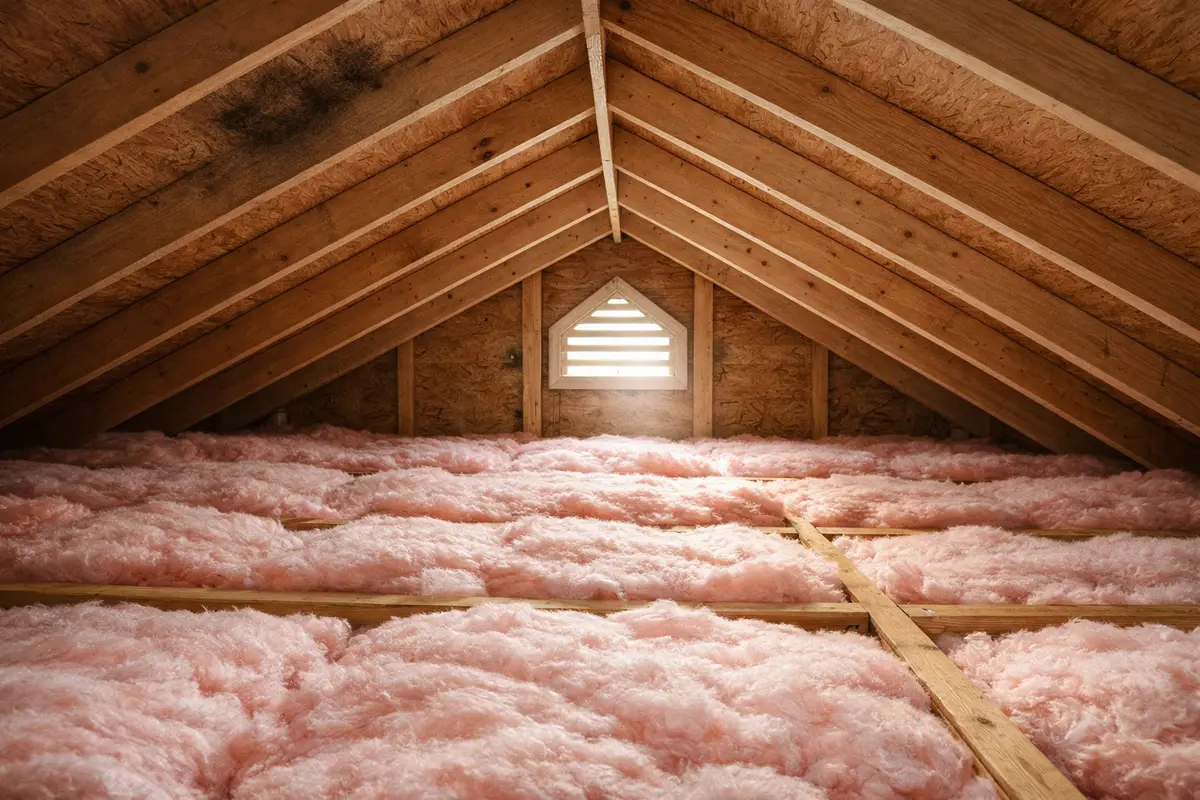
The attic is where a small moisture problem hides for years. You may notice frost on the roof boards in winter, insulation that feels damp, dark spots on the wood, or a musty smell when you open the hatch. This troubleshooter is for homeowners who have noticed one of those and want to know what is most likely going on and how fast to act.
It asks the safety question first. If water is dripping through the ceiling below, the ceiling is sagging, or the wet area is near wiring, lights or a fan, the answer is to act now and sort out the cause later. If not, you choose what you see, and the questions narrow it down from there. It does not diagnose your attic. It points you at the likeliest cause so you can ask the right professional the right question.
Why attics get wet
Water gets into an attic in a pair of ways. One is the roof, where rain or melting snow finds a gap. The other is the house itself. Warm, moist air from showers, cooking and breathing rises, leaks through small openings in the ceiling, and meets cold roof boards. ENERGY STAR describes frosty areas in attic insulation as warm, moist air condensing and then freezing. When the weather warms, the frost melts, and it can look exactly like a roof leak.
That is why the questions ask about timing. Water that follows rain points to the roof. Frost or dampness that comes and goes with cold weather points to moisture from the house.
Common leak paths from the house into the attic include the attic hatch, holes for wiring and pipes, recessed lights and soffits that open into the attic. ENERGY STAR also flags kitchen, bathroom and dryer vents that end in the attic instead of outdoors, and it says to hire a professional for that. Sealing the ceiling helps with ice dams too, which is why the University of Minnesota Extension puts air sealing first.
How to use the result
Each result has a label: act now, deal with it soon, or keep an eye on it. Read the diagnosis, then the steps in order. Most results start with a short safety step. Hot furnace flues, old wiring and gas appliances are all things people meet in an attic, and ENERGY STAR gives specific cautions about them. If the attic is hard to reach or cramped, the guidance is to hire someone.
Photograph what you see before you change anything. Photos help an insurer, a roofer and a weatherization contractor, and they show whether a stain is growing.
Worked example: frost that came back every winter
A homeowner opens the attic hatch in January and sees white frost on the nail tips and the underside of the roof boards. The ceiling below is dry. She answers no to the safety question and picks frost. A vent question comes next. She follows the bathroom fan duct and finds it lying loose on the insulation, ending nowhere near the roof. The result says a vent is dumping moist air into the attic. She has the duct connected to a vent that leads outside, and she asks the installer to check the attic hatch for gaps. The next winter she photographs the same spot in January. The boards are dry. The fix was a duct, not a new roof.
When to call a professional
Call someone when you find wet or moldy insulation you cannot explain, rotted wood, a vent that ends in the attic, or knob and tube wiring. EPA says that when mold covers more than about 10 square feet or there has been a lot of water damage, you should consult a professional. Mold also needs the moisture fixed. If you clean it and leave the water problem, it will most likely return.
If you add insulation or seal air leaks, ask for a check of any gas appliance afterward. ENERGY STAR notes that sealing can, in some cases, cause naturally venting combustion appliances to back-draft.
Insurance
A sudden roof or pipe failure may be covered, and slow leaks and wear usually are not. Is my damage covered? walks through the difference.
Next steps
Work out where the water gets in with the roof leak troubleshooter. If a stain has reached the ceiling, use the ceiling water stain troubleshooter. When you are ready to bring in help, the hiring a contractor checklist covers vetting and written estimates.
Sources
- EPA, A brief guide to mold, moisture and your home epa.gov
- EPA, Mold cleanup in your home epa.gov
- ENERGY STAR, Attic air sealing project energystar.gov
- University of Minnesota Extension, Dealing with and preventing ice dams extension.umn.edu
- University of Minnesota Extension, Controlling moisture problems in your home extension.umn.edu
- NC State Extension, Inspecting a house content.ces.ncsu.edu