
TroubleshooterA few questions, then an urgency level and next steps
Foundation Crack Troubleshooter
A bulging or leaning wall, a sagging floor or a crack that is opening fast means act now. Otherwise the pattern and whether the crack is still moving tell you how worried to be, and a licensed structural engineer settles the serious cases.
On this page
Foundation and wall cracks: what the pattern suggests
Pick where the crack is and what it looks like, and follow the questions to what the pattern usually means, how urgent it is and who to call. It reads the pattern, not your house. A licensed structural engineer has the last word on anything that looks structural.
Is a wall bulging or leaning, a floor or roofline sagging, a crack opening up fast, or is anything near the crack giving way?
Answer yes if any of those is true right now, or if you hear cracking sounds.
Yes, one of those is true
Act now
Treat it as a possible structural failure
A wall that bulges or leans, or a floor that gives way, can mean the part of the building that carries the load is moving. HUD's rehabilitation guide says large differential settlement affects beams, joists, floors and roofs, which must be evaluated for loss of bearing and sometimes for fracture. This is not something to measure and wait on.
What to do
- If there is a gas smell, standing water near electrical equipment, or damage to the structure, deal with that first: leave, and call the gas company, an electrician or an inspector before anything else.
- Keep people and pets out of the rooms next to the damaged wall or under the sagging floor or ceiling, and do not use the basement or crawl space under it.
- If the whole house feels unsafe, leave and call your local building department or fire department, and tell them what you see.
- Do not prop, jack or cut anything yourself. A wrong support can move the load somewhere worse.
- Hire a licensed structural engineer to look at it. Ask for a written report, and hire the engineer separately from any contractor who would do the repair, so the advice does not depend on a sale.
- Photograph everything before it is moved, and tell your insurer if a storm, flood or burst pipe came first.
No, the crack is stable so far
Where is the crack?
On an inside wall or ceiling, in plaster or drywall
What does the crack look like?
Doors and windows that stick, and floors that slope, count as signs of movement.
Thin, or along a drywall joint, or it opens and closes with the seasons
Keep an eye on it
Most likely small movement in the finishes
HUD says wall and ceiling cracks are usually caused by building settlement, deflection, warping of wood framing, or small seasonal movements from changes in temperature and humidity. Seasonal cracks open and close, so they can be filled with a flexible, paintable sealant but not truly repaired. Cracks from settlement can be repaired if the movement has stopped, which is often the case.
What to do
- Photograph the crack with a coin or ruler beside it, and write the date on a note in the picture. Photograph it from the same spot each time you check.
- Check for rust stains at nails or corner beads and signs of water, which point to a leak instead of movement.
- Wait to repair until you know whether it has stopped: a crack you patch that reopens is still moving.
- If the crack grows, or doors begin to stick, come back and answer the questions again from the start.
Wide or long, or doors and windows stick or floors slope
Is the crack still moving?
A clean crack with sharp, fresh edges suggests recent movement. A dirty, painted-over or previously filled crack may be old.
Clean, sharp edges, or it has grown or new cracks have appeared
Deal with it soon
A recent or active crack: likely settlement still under way
HUD says to look for signs of movement. A clean crack indicates recent movement, and new, sharp cracks in stucco may indicate movement behind the walls. Tapering cracks that follow a rough diagonal from corners and openings are the usual pattern of faster differential settlement. Causes HUD lists include soil that dried out near trees, swelling soil from blocked drainage, frost heave, changing water table, and erosion from leaking pipes or poor drainage.
What to do
- If there is a gas smell, standing water near electrical equipment, or damage to the structure, deal with that first: leave, and call the gas company, an electrician or an inspector before anything else.
- Photograph the crack with a coin or ruler beside it, and write the date on a note in the picture. Photograph it from the same spot each time you check.
- Check the cause you can see: downspouts that empty beside the wall, a low spot where water stands, large trees close to the wall, and wet spots in the yard that could mean a leaking pipe.
- Hire a licensed structural engineer to look at it. Ask for a written report, and hire the engineer separately from any contractor who would do the repair, so the advice does not depend on a sale.
- If the engineer suspects the soil, a soils engineer may also be needed, as HUD notes for differential settlement.
- Wait for the engineer's report before paying for any foundation repair.
Doors and windows stick, floors slope, or the crack runs through the floor, walls and plaster
Deal with it soon
Several signs of differential settlement
HUD lists vertical distortion or cracking of masonry walls, warped openings, sloped floors and sticking doors and windows as the indications of differential settlement. It warns that large settlements between foundation walls and interior columns or piers are more serious, since they move beams, joists, floors and roofs. It also warns that many signs of masonry distress are wrongly blamed on settlement when moisture and heat are the cause, which is why an engineer's reading is worth paying for.
What to do
- If there is a gas smell, standing water near electrical equipment, or damage to the structure, deal with that first: leave, and call the gas company, an electrician or an inspector before anything else.
- Stay out from under a floor or ceiling that sags noticeably, and do not store heavy items there.
- Hire a licensed structural engineer to look at it. Ask for a written report, and hire the engineer separately from any contractor who would do the repair, so the advice does not depend on a sale.
- Write down which doors and windows stick, which floors slope and where, and the date you first noticed each.
- Photograph the crack with a coin or ruler beside it, and write the date on a note in the picture. Photograph it from the same spot each time you check.
- If a leak, flood or storm came first, tell your insurer before repairs. The cause affects coverage.
Dirty, painted over or filled before, and it has not changed
Keep an eye on it
Probably an old crack that has stopped
HUD says settlement most often happens early in a building's life, then slows to a point where movement no longer occurs. Minor settlement cracking is structurally harmful only if moisture leaks in through it over a long time. A dirty or previously filled crack may be inactive, but only repeated checks will show it.
What to do
- Photograph the crack with a coin or ruler beside it, and write the date on a note in the picture. Photograph it from the same spot each time you check.
- Check it again after a season of weather and after heavy rain or a dry spell. Compare with the earlier photos.
- Seal it against water with a product made for the surface once you are sure it has stopped. A crack that reopens is still moving.
- If it widens, shows a clean edge or new cracks appear, answer the questions again from the start.
I do not know how old it is
Deal with it soon
Not sure yet: measure movement over time
HUD says to evaluate cracks for their cause, look for signs of movement, and measure movement over time if possible, because a cyclical crack opens and closes with the season while a settlement crack keeps going. Its inspectors use a commercial joint movement indicator fastened over the crack, and it notes that hand measurements are less precise and need repeated visits.
What to do
- Mark both ends of the crack with a pencil and date the marks, and photograph it with a ruler beside it.
- Put a straight pencil line across the crack and check it from time to time to see if the sides shift.
- Look for the signs of trouble: a clean edge, a tapering crack, sticking doors, sloped floors, or water at the crack.
- Get a licensed structural engineer to look at it if any of those appear, or if the crack keeps widening.
- Do not seal or fill it until you know whether it moves.
It runs through plaster, the wall and the floor or foundation below
Is the crack still moving?
A clean crack with sharp, fresh edges suggests recent movement. A dirty, painted-over or previously filled crack may be old.
Clean, sharp edges, or it has grown or new cracks have appeared
Deal with it soon
A recent or active crack: likely settlement still under way
HUD says to look for signs of movement. A clean crack indicates recent movement, and new, sharp cracks in stucco may indicate movement behind the walls. Tapering cracks that follow a rough diagonal from corners and openings are the usual pattern of faster differential settlement. Causes HUD lists include soil that dried out near trees, swelling soil from blocked drainage, frost heave, changing water table, and erosion from leaking pipes or poor drainage.
What to do
- If there is a gas smell, standing water near electrical equipment, or damage to the structure, deal with that first: leave, and call the gas company, an electrician or an inspector before anything else.
- Photograph the crack with a coin or ruler beside it, and write the date on a note in the picture. Photograph it from the same spot each time you check.
- Check the cause you can see: downspouts that empty beside the wall, a low spot where water stands, large trees close to the wall, and wet spots in the yard that could mean a leaking pipe.
- Hire a licensed structural engineer to look at it. Ask for a written report, and hire the engineer separately from any contractor who would do the repair, so the advice does not depend on a sale.
- If the engineer suspects the soil, a soils engineer may also be needed, as HUD notes for differential settlement.
- Wait for the engineer's report before paying for any foundation repair.
Doors and windows stick, floors slope, or the crack runs through the floor, walls and plaster
Deal with it soon
Several signs of differential settlement
HUD lists vertical distortion or cracking of masonry walls, warped openings, sloped floors and sticking doors and windows as the indications of differential settlement. It warns that large settlements between foundation walls and interior columns or piers are more serious, since they move beams, joists, floors and roofs. It also warns that many signs of masonry distress are wrongly blamed on settlement when moisture and heat are the cause, which is why an engineer's reading is worth paying for.
What to do
- If there is a gas smell, standing water near electrical equipment, or damage to the structure, deal with that first: leave, and call the gas company, an electrician or an inspector before anything else.
- Stay out from under a floor or ceiling that sags noticeably, and do not store heavy items there.
- Hire a licensed structural engineer to look at it. Ask for a written report, and hire the engineer separately from any contractor who would do the repair, so the advice does not depend on a sale.
- Write down which doors and windows stick, which floors slope and where, and the date you first noticed each.
- Photograph the crack with a coin or ruler beside it, and write the date on a note in the picture. Photograph it from the same spot each time you check.
- If a leak, flood or storm came first, tell your insurer before repairs. The cause affects coverage.
Dirty, painted over or filled before, and it has not changed
Keep an eye on it
Probably an old crack that has stopped
HUD says settlement most often happens early in a building's life, then slows to a point where movement no longer occurs. Minor settlement cracking is structurally harmful only if moisture leaks in through it over a long time. A dirty or previously filled crack may be inactive, but only repeated checks will show it.
What to do
- Photograph the crack with a coin or ruler beside it, and write the date on a note in the picture. Photograph it from the same spot each time you check.
- Check it again after a season of weather and after heavy rain or a dry spell. Compare with the earlier photos.
- Seal it against water with a product made for the surface once you are sure it has stopped. A crack that reopens is still moving.
- If it widens, shows a clean edge or new cracks appear, answer the questions again from the start.
I do not know how old it is
Deal with it soon
Not sure yet: measure movement over time
HUD says to evaluate cracks for their cause, look for signs of movement, and measure movement over time if possible, because a cyclical crack opens and closes with the season while a settlement crack keeps going. Its inspectors use a commercial joint movement indicator fastened over the crack, and it notes that hand measurements are less precise and need repeated visits.
What to do
- Mark both ends of the crack with a pencil and date the marks, and photograph it with a ruler beside it.
- Put a straight pencil line across the crack and check it from time to time to see if the sides shift.
- Look for the signs of trouble: a clean edge, a tapering crack, sticking doors, sloped floors, or water at the crack.
- Get a licensed structural engineer to look at it if any of those appear, or if the crack keeps widening.
- Do not seal or fill it until you know whether it moves.
On the outside of a brick, stone, block or stucco wall above the ground
Which pattern fits best?
Look from a few steps back. Patterns tell you more than any single crack.
Cracks at corners of long walls, steps or jogs in the wall, or around windows, that look wider in cold weather
Deal with it soon
Likely thermal and moisture movement
HUD explains that brick walls expand in warm weather and contract in cool weather, which builds stress at corners, jogs and openings. Those cracks usually open and close with the season, and they often cause only cosmetic trouble. The guide still says cracks like these should be examined by a structural engineer, who may find that expansion joints are needed.
What to do
- Photograph the crack with a coin or ruler beside it, and write the date on a note in the picture. Photograph it from the same spot each time you check.
- Do not fill the crack with mortar. HUD says filling a cracking-and-closing crack with mortar holds it open and cracks the masonry somewhere else. Use a flexible sealant once the cause is known.
- Look for water getting in around the crack: stains on the inside, damp plaster, or efflorescence, which is a white powdery deposit.
- Have a structural engineer look at it if the crack is wide, runs through the bricks, or has moved since your last photo.
Tapering cracks, wide at one end and hairline at the other, running diagonally along mortar joints from a corner or opening
Is the crack still moving?
A clean crack with sharp, fresh edges suggests recent movement. A dirty, painted-over or previously filled crack may be old.
Clean, sharp edges, or it has grown or new cracks have appeared
Deal with it soon
A recent or active crack: likely settlement still under way
HUD says to look for signs of movement. A clean crack indicates recent movement, and new, sharp cracks in stucco may indicate movement behind the walls. Tapering cracks that follow a rough diagonal from corners and openings are the usual pattern of faster differential settlement. Causes HUD lists include soil that dried out near trees, swelling soil from blocked drainage, frost heave, changing water table, and erosion from leaking pipes or poor drainage.
What to do
- If there is a gas smell, standing water near electrical equipment, or damage to the structure, deal with that first: leave, and call the gas company, an electrician or an inspector before anything else.
- Photograph the crack with a coin or ruler beside it, and write the date on a note in the picture. Photograph it from the same spot each time you check.
- Check the cause you can see: downspouts that empty beside the wall, a low spot where water stands, large trees close to the wall, and wet spots in the yard that could mean a leaking pipe.
- Hire a licensed structural engineer to look at it. Ask for a written report, and hire the engineer separately from any contractor who would do the repair, so the advice does not depend on a sale.
- If the engineer suspects the soil, a soils engineer may also be needed, as HUD notes for differential settlement.
- Wait for the engineer's report before paying for any foundation repair.
Doors and windows stick, floors slope, or the crack runs through the floor, walls and plaster
Deal with it soon
Several signs of differential settlement
HUD lists vertical distortion or cracking of masonry walls, warped openings, sloped floors and sticking doors and windows as the indications of differential settlement. It warns that large settlements between foundation walls and interior columns or piers are more serious, since they move beams, joists, floors and roofs. It also warns that many signs of masonry distress are wrongly blamed on settlement when moisture and heat are the cause, which is why an engineer's reading is worth paying for.
What to do
- If there is a gas smell, standing water near electrical equipment, or damage to the structure, deal with that first: leave, and call the gas company, an electrician or an inspector before anything else.
- Stay out from under a floor or ceiling that sags noticeably, and do not store heavy items there.
- Hire a licensed structural engineer to look at it. Ask for a written report, and hire the engineer separately from any contractor who would do the repair, so the advice does not depend on a sale.
- Write down which doors and windows stick, which floors slope and where, and the date you first noticed each.
- Photograph the crack with a coin or ruler beside it, and write the date on a note in the picture. Photograph it from the same spot each time you check.
- If a leak, flood or storm came first, tell your insurer before repairs. The cause affects coverage.
Dirty, painted over or filled before, and it has not changed
Keep an eye on it
Probably an old crack that has stopped
HUD says settlement most often happens early in a building's life, then slows to a point where movement no longer occurs. Minor settlement cracking is structurally harmful only if moisture leaks in through it over a long time. A dirty or previously filled crack may be inactive, but only repeated checks will show it.
What to do
- Photograph the crack with a coin or ruler beside it, and write the date on a note in the picture. Photograph it from the same spot each time you check.
- Check it again after a season of weather and after heavy rain or a dry spell. Compare with the earlier photos.
- Seal it against water with a product made for the surface once you are sure it has stopped. A crack that reopens is still moving.
- If it widens, shows a clean edge or new cracks appear, answer the questions again from the start.
I do not know how old it is
Deal with it soon
Not sure yet: measure movement over time
HUD says to evaluate cracks for their cause, look for signs of movement, and measure movement over time if possible, because a cyclical crack opens and closes with the season while a settlement crack keeps going. Its inspectors use a commercial joint movement indicator fastened over the crack, and it notes that hand measurements are less precise and need repeated visits.
What to do
- Mark both ends of the crack with a pencil and date the marks, and photograph it with a ruler beside it.
- Put a straight pencil line across the crack and check it from time to time to see if the sides shift.
- Look for the signs of trouble: a clean edge, a tapering crack, sticking doors, sloped floors, or water at the crack.
- Get a licensed structural engineer to look at it if any of those appear, or if the crack keeps widening.
- Do not seal or fill it until you know whether it moves.
A stepped crack above a window or door, rust stains, or crumbling brick around sills and chimneys
Deal with it soon
Possible failed lintel, rusting metal or freeze damage
HUD describes step cracks that start at the edge of an opening and meet in an inverted V above its midpoint as a sign that a lintel or arch over the opening has deflected or failed. Rust stains suggest corroding iron or steel, which swells and pushes the masonry apart. Cracks near sills, chimneys and parapets are usually water getting into the masonry and freezing. The guide says cracks like these should be examined by a structural engineer.
What to do
- Stay out from under the opening and keep children and pets away from a wall with loose or shifting brick.
- Hire a licensed structural engineer to look at it. Ask for a written report, and hire the engineer separately from any contractor who would do the repair, so the advice does not depend on a sale.
- Look for the water path: a clogged gutter, a leaking downspout, missing flashing or a failed joint at a sill.
- Do not cover the wall with a sealant or damp-proofing paint. HUD says surface coatings are rarely effective and can trap water inside the wall.
- Photograph the crack with a coin or ruler beside it, and write the date on a note in the picture. Photograph it from the same spot each time you check.
A near-vertical crack where a bay window, porch or addition meets the house, with edges that do not line up
Is the crack still moving?
A clean crack with sharp, fresh edges suggests recent movement. A dirty, painted-over or previously filled crack may be old.
Clean, sharp edges, or it has grown or new cracks have appeared
Deal with it soon
A recent or active crack: likely settlement still under way
HUD says to look for signs of movement. A clean crack indicates recent movement, and new, sharp cracks in stucco may indicate movement behind the walls. Tapering cracks that follow a rough diagonal from corners and openings are the usual pattern of faster differential settlement. Causes HUD lists include soil that dried out near trees, swelling soil from blocked drainage, frost heave, changing water table, and erosion from leaking pipes or poor drainage.
What to do
- If there is a gas smell, standing water near electrical equipment, or damage to the structure, deal with that first: leave, and call the gas company, an electrician or an inspector before anything else.
- Photograph the crack with a coin or ruler beside it, and write the date on a note in the picture. Photograph it from the same spot each time you check.
- Check the cause you can see: downspouts that empty beside the wall, a low spot where water stands, large trees close to the wall, and wet spots in the yard that could mean a leaking pipe.
- Hire a licensed structural engineer to look at it. Ask for a written report, and hire the engineer separately from any contractor who would do the repair, so the advice does not depend on a sale.
- If the engineer suspects the soil, a soils engineer may also be needed, as HUD notes for differential settlement.
- Wait for the engineer's report before paying for any foundation repair.
Doors and windows stick, floors slope, or the crack runs through the floor, walls and plaster
Deal with it soon
Several signs of differential settlement
HUD lists vertical distortion or cracking of masonry walls, warped openings, sloped floors and sticking doors and windows as the indications of differential settlement. It warns that large settlements between foundation walls and interior columns or piers are more serious, since they move beams, joists, floors and roofs. It also warns that many signs of masonry distress are wrongly blamed on settlement when moisture and heat are the cause, which is why an engineer's reading is worth paying for.
What to do
- If there is a gas smell, standing water near electrical equipment, or damage to the structure, deal with that first: leave, and call the gas company, an electrician or an inspector before anything else.
- Stay out from under a floor or ceiling that sags noticeably, and do not store heavy items there.
- Hire a licensed structural engineer to look at it. Ask for a written report, and hire the engineer separately from any contractor who would do the repair, so the advice does not depend on a sale.
- Write down which doors and windows stick, which floors slope and where, and the date you first noticed each.
- Photograph the crack with a coin or ruler beside it, and write the date on a note in the picture. Photograph it from the same spot each time you check.
- If a leak, flood or storm came first, tell your insurer before repairs. The cause affects coverage.
Dirty, painted over or filled before, and it has not changed
Keep an eye on it
Probably an old crack that has stopped
HUD says settlement most often happens early in a building's life, then slows to a point where movement no longer occurs. Minor settlement cracking is structurally harmful only if moisture leaks in through it over a long time. A dirty or previously filled crack may be inactive, but only repeated checks will show it.
What to do
- Photograph the crack with a coin or ruler beside it, and write the date on a note in the picture. Photograph it from the same spot each time you check.
- Check it again after a season of weather and after heavy rain or a dry spell. Compare with the earlier photos.
- Seal it against water with a product made for the surface once you are sure it has stopped. A crack that reopens is still moving.
- If it widens, shows a clean edge or new cracks appear, answer the questions again from the start.
I do not know how old it is
Deal with it soon
Not sure yet: measure movement over time
HUD says to evaluate cracks for their cause, look for signs of movement, and measure movement over time if possible, because a cyclical crack opens and closes with the season while a settlement crack keeps going. Its inspectors use a commercial joint movement indicator fastened over the crack, and it notes that hand measurements are less precise and need repeated visits.
What to do
- Mark both ends of the crack with a pencil and date the marks, and photograph it with a ruler beside it.
- Put a straight pencil line across the crack and check it from time to time to see if the sides shift.
- Look for the signs of trouble: a clean edge, a tapering crack, sticking doors, sloped floors, or water at the crack.
- Get a licensed structural engineer to look at it if any of those appear, or if the crack keeps widening.
- Do not seal or fill it until you know whether it moves.
The wall is bulging or leaning
Act now
Treat it as a possible structural failure
A wall that bulges or leans, or a floor that gives way, can mean the part of the building that carries the load is moving. HUD's rehabilitation guide says large differential settlement affects beams, joists, floors and roofs, which must be evaluated for loss of bearing and sometimes for fracture. This is not something to measure and wait on.
What to do
- If there is a gas smell, standing water near electrical equipment, or damage to the structure, deal with that first: leave, and call the gas company, an electrician or an inspector before anything else.
- Keep people and pets out of the rooms next to the damaged wall or under the sagging floor or ceiling, and do not use the basement or crawl space under it.
- If the whole house feels unsafe, leave and call your local building department or fire department, and tell them what you see.
- Do not prop, jack or cut anything yourself. A wrong support can move the load somewhere worse.
- Hire a licensed structural engineer to look at it. Ask for a written report, and hire the engineer separately from any contractor who would do the repair, so the advice does not depend on a sale.
- Photograph everything before it is moved, and tell your insurer if a storm, flood or burst pipe came first.
In a foundation wall, seen from the basement, crawl space or outside at ground level
What do you see in or at the foundation wall?
A horizontal or sweeping crack, or the wall bows inward
Act now
A horizontal crack or bowing wall: potentially serious
HUD says horizontal or sweeping cracks in a foundation wall can come from poor backfill, vibration from heavy equipment or vehicles close to the wall, or swelling and frozen, water-saturated soil pushing on it. It calls this distress potentially serious, because the wall that carries part of the building above has been bent or broken. Fixes can include careful jacking, interior buttresses, epoxy grout injection and relieving soil pressure, and these are not jobs to guess at.
What to do
- If there is a gas smell, standing water near electrical equipment, or damage to the structure, deal with that first: leave, and call the gas company, an electrician or an inspector before anything else.
- Keep people out of the area against the wall, and do not store heavy loads against it.
- Keep vehicles and heavy equipment away from the wall. Vibration is one of the causes HUD lists.
- Do not dig against the wall yourself or pile soil against it. Soil pressure is part of the problem.
- Hire a licensed structural engineer to look at it. Ask for a written report, and hire the engineer separately from any contractor who would do the repair, so the advice does not depend on a sale.
- Check roof water and ground slope near the crack: broken downspouts and poor drainage load the wall with wet soil.
Tapering or diagonal cracks at corners or openings, sloped floors, or sticking doors and windows
Is the crack still moving?
A clean crack with sharp, fresh edges suggests recent movement. A dirty, painted-over or previously filled crack may be old.
Clean, sharp edges, or it has grown or new cracks have appeared
Deal with it soon
A recent or active crack: likely settlement still under way
HUD says to look for signs of movement. A clean crack indicates recent movement, and new, sharp cracks in stucco may indicate movement behind the walls. Tapering cracks that follow a rough diagonal from corners and openings are the usual pattern of faster differential settlement. Causes HUD lists include soil that dried out near trees, swelling soil from blocked drainage, frost heave, changing water table, and erosion from leaking pipes or poor drainage.
What to do
- If there is a gas smell, standing water near electrical equipment, or damage to the structure, deal with that first: leave, and call the gas company, an electrician or an inspector before anything else.
- Photograph the crack with a coin or ruler beside it, and write the date on a note in the picture. Photograph it from the same spot each time you check.
- Check the cause you can see: downspouts that empty beside the wall, a low spot where water stands, large trees close to the wall, and wet spots in the yard that could mean a leaking pipe.
- Hire a licensed structural engineer to look at it. Ask for a written report, and hire the engineer separately from any contractor who would do the repair, so the advice does not depend on a sale.
- If the engineer suspects the soil, a soils engineer may also be needed, as HUD notes for differential settlement.
- Wait for the engineer's report before paying for any foundation repair.
Doors and windows stick, floors slope, or the crack runs through the floor, walls and plaster
Deal with it soon
Several signs of differential settlement
HUD lists vertical distortion or cracking of masonry walls, warped openings, sloped floors and sticking doors and windows as the indications of differential settlement. It warns that large settlements between foundation walls and interior columns or piers are more serious, since they move beams, joists, floors and roofs. It also warns that many signs of masonry distress are wrongly blamed on settlement when moisture and heat are the cause, which is why an engineer's reading is worth paying for.
What to do
- If there is a gas smell, standing water near electrical equipment, or damage to the structure, deal with that first: leave, and call the gas company, an electrician or an inspector before anything else.
- Stay out from under a floor or ceiling that sags noticeably, and do not store heavy items there.
- Hire a licensed structural engineer to look at it. Ask for a written report, and hire the engineer separately from any contractor who would do the repair, so the advice does not depend on a sale.
- Write down which doors and windows stick, which floors slope and where, and the date you first noticed each.
- Photograph the crack with a coin or ruler beside it, and write the date on a note in the picture. Photograph it from the same spot each time you check.
- If a leak, flood or storm came first, tell your insurer before repairs. The cause affects coverage.
Dirty, painted over or filled before, and it has not changed
Keep an eye on it
Probably an old crack that has stopped
HUD says settlement most often happens early in a building's life, then slows to a point where movement no longer occurs. Minor settlement cracking is structurally harmful only if moisture leaks in through it over a long time. A dirty or previously filled crack may be inactive, but only repeated checks will show it.
What to do
- Photograph the crack with a coin or ruler beside it, and write the date on a note in the picture. Photograph it from the same spot each time you check.
- Check it again after a season of weather and after heavy rain or a dry spell. Compare with the earlier photos.
- Seal it against water with a product made for the surface once you are sure it has stopped. A crack that reopens is still moving.
- If it widens, shows a clean edge or new cracks appear, answer the questions again from the start.
I do not know how old it is
Deal with it soon
Not sure yet: measure movement over time
HUD says to evaluate cracks for their cause, look for signs of movement, and measure movement over time if possible, because a cyclical crack opens and closes with the season while a settlement crack keeps going. Its inspectors use a commercial joint movement indicator fastened over the crack, and it notes that hand measurements are less precise and need repeated visits.
What to do
- Mark both ends of the crack with a pencil and date the marks, and photograph it with a ruler beside it.
- Put a straight pencil line across the crack and check it from time to time to see if the sides shift.
- Look for the signs of trouble: a clean edge, a tapering crack, sticking doors, sloped floors, or water at the crack.
- Get a licensed structural engineer to look at it if any of those appear, or if the crack keeps widening.
- Do not seal or fill it until you know whether it moves.
A thin vertical crack in the middle part of a concrete block wall, old and dirty
Keep an eye on it
Likely a shrinkage crack that formed years ago
HUD says concrete block walls shrink as they dry, and the cracks usually form in the first year, in the middle part of the wall, with the footer below still intact. It calls shrinkage cracking rarely serious and says it may already have been repaired in an older building. A clean, new, tapering or diagonal crack is a different thing, so check that this one is dirty, old and not growing.
What to do
- Photograph the crack with a coin or ruler beside it, and write the date on a note in the picture. Photograph it from the same spot each time you check.
- Check that the crack is dirty or previously filled. HUD says a clean crack indicates recent movement, and a dirty or filled one may be inactive.
- Look for water coming in at the crack on a rainy day. If it does, go back to the water question.
- If the wall is unsound, HUD says an engineer may restore it by injecting epoxy grout into the cracks or adding pilasters.
Dampness, water stains, white powder or water coming in at a crack
Deal with it soon
Water getting in: fix the water, then judge the crack
A damp wall, water stains, efflorescence and rust on metal are the signs HUD lists for water penetration in a basement, and it calls a wet basement one of the most common problems in small residential buildings. University of Minnesota Extension says concrete and block foundations usually develop some cracks, that drainage usually removes the water, and that grading and gutters are the most common causes. HUD adds that minor settlement cracking is structurally harmful mainly when long-term moisture leakage through the cracks damages the building.
What to do
- Check the roof water first: clogged gutters, downspouts that empty beside the wall, and leaking exterior faucets or supply lines near the building.
- Slope the soil away from the wall. University of Minnesota Extension recommends 1 inch per foot for at least 6 feet. Settled backfill lets water collect against the wall.
- Check the sump pump discharge, window wells and any open pits for water running back toward the house.
- Dry wet materials promptly and watch for mold. The water damage checklist covers the drying order.
- If the water keeps coming in after the drainage is fixed, or the crack is moving, call a licensed structural engineer, then a waterproofing or foundation contractor.
In a pier, post or column under a porch, bay window or addition, or where one of those meets the house
What is wrong with the pier, post or porch?
It leans or has dropped, or the porch or bay has pulled away from the house
Deal with it soon
A pier that is settling, heaving or overstressed
HUD says piers can settle or rotate, which lowers or tilts them and loses bearing, and can heave from frost when the footing is too shallow, most commonly under porches. Vertical cracking or bulging is a sign of overstressing. The guide shows one overstressed pier that should be rebuilt entirely. Masonry walls over settled piers crack, and wood framing sags.
What to do
- Keep people off a porch, stair or deck that sits on a pier that leans, has dropped or is cracking.
- Do not add weight to it, and do not park or work close by.
- Hire a licensed structural engineer to look at it. Ask for a written report, and hire the engineer separately from any contractor who would do the repair, so the advice does not depend on a sale.
- Photograph the crack with a coin or ruler beside it, and write the date on a note in the picture. Photograph it from the same spot each time you check.
The pier or column shows vertical cracks, bulging or crumbling
Deal with it soon
A pier that is settling, heaving or overstressed
HUD says piers can settle or rotate, which lowers or tilts them and loses bearing, and can heave from frost when the footing is too shallow, most commonly under porches. Vertical cracking or bulging is a sign of overstressing. The guide shows one overstressed pier that should be rebuilt entirely. Masonry walls over settled piers crack, and wood framing sags.
What to do
- Keep people off a porch, stair or deck that sits on a pier that leans, has dropped or is cracking.
- Do not add weight to it, and do not park or work close by.
- Hire a licensed structural engineer to look at it. Ask for a written report, and hire the engineer separately from any contractor who would do the repair, so the advice does not depend on a sale.
- Photograph the crack with a coin or ruler beside it, and write the date on a note in the picture. Photograph it from the same spot each time you check.
Only surface flaking or a hairline in the mortar, and nothing has moved
Deal with it soon
Not sure yet: measure movement over time
HUD says to evaluate cracks for their cause, look for signs of movement, and measure movement over time if possible, because a cyclical crack opens and closes with the season while a settlement crack keeps going. Its inspectors use a commercial joint movement indicator fastened over the crack, and it notes that hand measurements are less precise and need repeated visits.
What to do
- Mark both ends of the crack with a pencil and date the marks, and photograph it with a ruler beside it.
- Put a straight pencil line across the crack and check it from time to time to see if the sides shift.
- Look for the signs of trouble: a clean edge, a tapering crack, sticking doors, sloped floors, or water at the crack.
- Get a licensed structural engineer to look at it if any of those appear, or if the crack keeps widening.
- Do not seal or fill it until you know whether it moves.
What this page is for
Most houses crack somewhere. Plaster hairlines, a stair-step line in a brick wall and a thin seam in a basement block wall are all common, and most are not emergencies. A few are. This troubleshooter is for a homeowner who has found a crack and wants to know which kind it probably is, how fast to act and who to call. It does not measure your house and it cannot see what is behind the wall. It sorts what you describe into the groups that the federal housing inspection guide uses.
The first question is about safety, not diagnosis. A wall that bulges or leans, a floor or roofline that sags, or a crack that is opening fast is treated as act now. After that, the questions are about where the crack is and what shape it has.
How to read the pattern
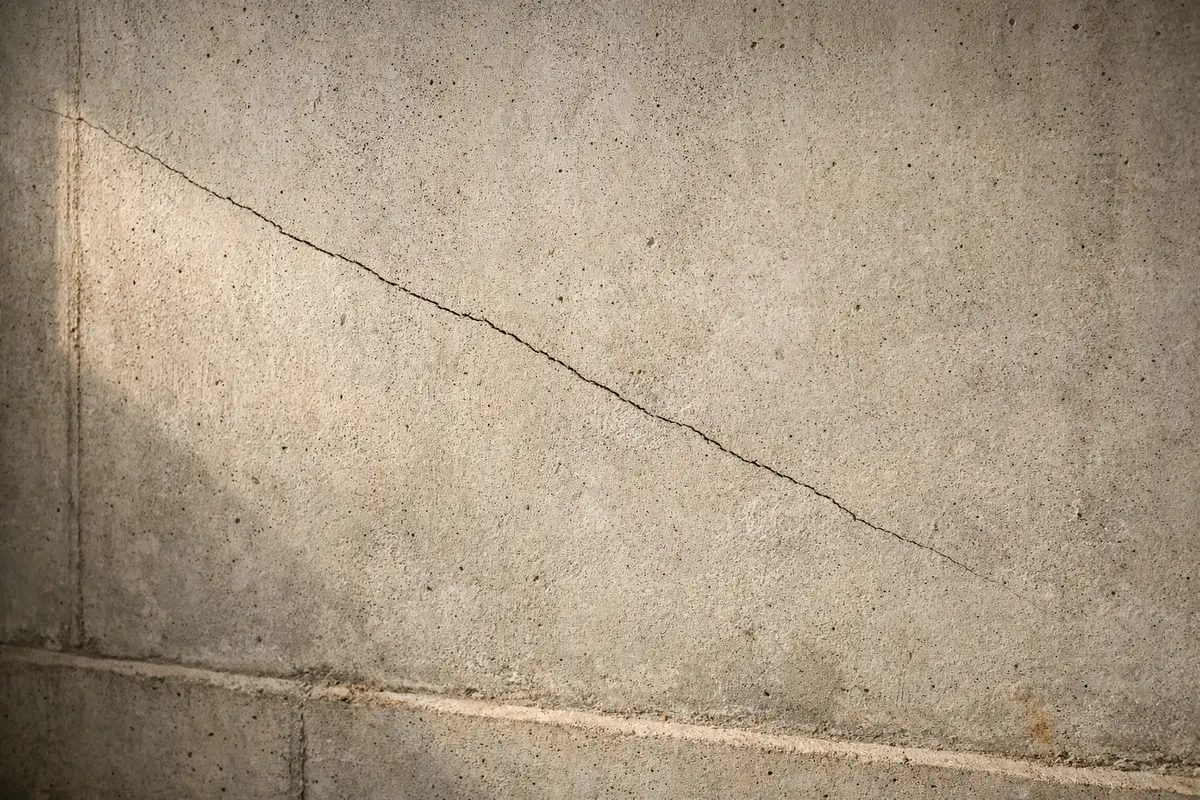
The source for most of this page is the Residential Rehabilitation Inspection Guide from HUD USER. It says that settlement cracks tend to taper, wide at one end and hairline at the other, and to follow a rough diagonal along mortar joints from corners and openings. Cracks that are nearly vertical and whose edges do not line up, where a bay window, porch or addition meets the house, point to a foundation or pier under that part that is not holding up.
Cracks from heat and moisture look different. Brick walls grow in warm weather and shrink in cool weather, so cracks show up at corners, jogs and openings, and they open and close with the season. HUD says filling those with mortar holds them open and moves the cracking somewhere else, so a flexible sealant is the repair. Shrinkage cracks in concrete block usually form in the first year, near the middle of the wall, and HUD calls them rarely serious.
The most worrying pattern is a horizontal or sweeping crack in a foundation wall, or a wall that bows inward. HUD calls that potentially serious, because the wall that carries part of the building is being pushed and bent.
Is it still moving?
HUD gives a simple field test. A clean crack with sharp edges suggests recent movement. A dirty, painted-over or previously filled crack may be inactive. It also says the width means different things at different building ages: a wide crack in a new house may point to rapid settlement, while the same crack in an old house may be very slow movement over many years. So width alone is not the answer, and this page does not use it to sort your crack. Dated photos with a ruler or coin beside the crack tell you more.
Water
A crack matters more when water comes through it. NC State Extension tells buyers to look at foundation walls, interior walls and ceilings for cracks, and especially horizontal ones, and to check for door frames that lean. University of Minnesota Extension says most basement water problems come from grading and gutters, and recommends soil that slopes away from the foundation at 1 inch per foot for at least 6 feet. Fix the water first, then watch the crack.
When to call a licensed structural engineer
Call one when the troubleshooter says act now, when a foundation wall is horizontally cracked or bowed, when doors and windows stick and floors slope, when the crack is clean and growing, or when a masonry crack is over a window or door. HUD says to get a structural engineer for masonry problems, and a soils engineer too when differential settlement is suspected. It also says older buildings with severe settlement may be very costly to repair, so get the engineer's written opinion before you sign a repair contract. A contractor who sells piers or injections is a different person from the engineer who tells you whether you need them.
Worked example: a diagonal crack by a basement window
A homeowner sees a crack running up and to the side from the corner of a basement window. It is wider at the window than at its top. She answers no to the safety question, picks the foundation wall, then the tapering diagonal crack, and then answers that the edges are clean and a second hairline crack has appeared near the stair. The result is a recent or active crack and a soon urgency. She photographs both cracks with a ruler, notes that a downspout empties right beside that corner, and moves it away. She hires an engineer to look at the pattern before she talks to any foundation company. The engineer's report, not a sales visit, tells her whether the movement has stopped.
Insurance and records
Most settlement is slow and is usually a maintenance and soil question. If a storm, flood or burst pipe came first, tell your insurer before repairs and keep your dated photos. The coverage questions walk through which causes matter.
Next steps
Use the water damage checklist if water has come in. Read the hiring a contractor checklist before you collect repair bids, and ask the contractor to follow the engineer's written plan. The annual maintenance checklist covers the gutters and grading that keep soil movement from getting worse. If the damage came from a storm or flood, see is my damage covered.
Sources
- HUD USER, Residential Rehabilitation Inspection Guide huduser.gov
- NC State Extension, Inspecting a house content.ces.ncsu.edu
- University of Minnesota Extension, Moisture in basements: causes and solutions extension.umn.edu