
ChecklistTick as you go, saved in this browser, prints cleanly
Storm Damage Walkthrough Checklist
Check gas, power and the structure before you go in, look at the roof from the ground, photograph every opening and wet spot, then cover openings with temporary repairs and report the loss. Hold off on permanent repairs.
On this page
Storm damage walkthrough
A safe, ordered first look after a storm. Tick items as you go; your ticks stay in this browser.
0 of 16 done
Before you walk the property
Outside
An adjuster checks the roof, interior, exterior and basement, so your photos should cover the same ground.
Source: NAIC, Navigating the claims process: recover and rebuild
Inside
Then
Sources (7)
- CDC, Safety guidelines: reentering your flooded home cdc.gov
- EPA, Flood cleanup to protect indoor air and your health epa.gov
- EPA, A brief guide to mold, moisture and your home epa.gov
- NAIC, Navigating the claims process: recover and rebuild content.naic.org
- NAIC, What you need to know when filing a homeowners claim content.naic.org
- Texas Department of Insurance, Home insurance guide tdi.texas.gov
- California Department of Insurance, Residential Property Claims Guide (April 2023) insurance.ca.gov
Why a walkthrough has an order
After a storm the instinct is to run straight to the worst damage. The better move is to spend a few minutes on safety, then work outside in, photographing as you go. That sequence protects you, and it produces the record an insurer will want.
The safety items come from the Centers for Disease Control and Prevention guidance on re-entering a flooded home. Go back in daylight and use battery lights instead of candles. If you smell gas, do not turn anything on: leave and call. If there is standing water, switch off the main power only from a dry place, and have an electrician check the system before power is restored. If the building is damaged, wait for an inspector. Those are written about floods, but a storm that brings water into a house raises the same risks.
Outside first
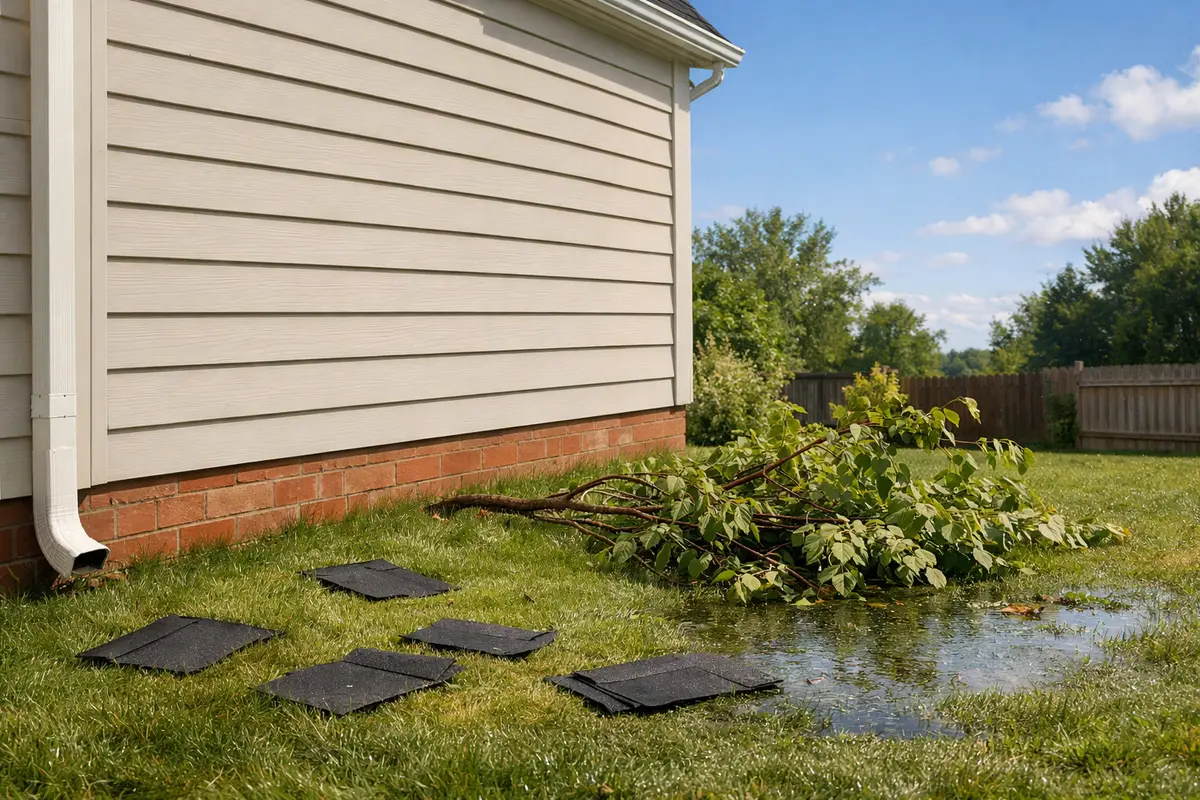
An adjuster for the insurer looks at the roof, the interior, the exterior and the basement, according to the NAIC, so your photographs should cover the same ground. Start from the ground. Look at the roof surface for lifted or missing areas and for openings, and take pictures from several angles. Do not climb onto a wet or damaged roof. Check that gutters are intact and that the ground still slopes away from the foundation, as the EPA recommends for moisture control. Photograph fences, sheds and other structures. If a car in a garage or carport was damaged, remember that it is handled through auto insurance, not the home policy.
Then inside
Look at ceilings and walls for stains, sagging and active drips, and note where water is entering. Check floors, carpet and cabinets. Open cabinets and drawers so hidden spaces can dry. Look into the attic and basement if you can do so safely. Write a list of damaged belongings, room by room, since the NAIC suggests that approach for anyone without a home inventory.
Worked example: hail on a Saturday afternoon
Hail passes over in the afternoon. Before going out, the homeowner checks for a gas smell and looks at the ceiling for sagging; nothing alarming. From the driveway she photographs the roof, the gutters, the car, the fence and the window screens. Indoors she finds one stained ceiling and a wet window sill. She photographs both, puts a bucket under the drip, and writes the rooms on a list. She covers the broken window with plywood and keeps the receipt. That evening she reports the loss and asks what the insurer needs. She decides to wait for the adjuster before any permanent roof repair. The whole thing took a couple of hours and left a clean record.
After the walkthrough
Temporary repairs only until the insurer has inspected. California's insurance department tells policyholders to protect the property by covering damage to roof, walls, doors and windows, and warns that a policy may not cover ensuing damage if reasonable steps were not taken. Dry wet materials within 24-48 hours where you can. Use the water damage checklist for the drying detail, and the claim documentation checklist to keep your records in order.
What this list leaves out
It does not diagnose structural damage. If doors will not close properly, floors look uneven, or walls have shifted, stop and have a qualified inspector look. It also does not tell you what your policy covers; the coverage checker can help you frame that question.