
TroubleshooterA few questions, then an urgency level and next steps
Sewage Backup Troubleshooter
Leave first if you smell gas or water is near electrical equipment. Once sewage is inside, call a professional experienced with contaminated water, document it, and ask your insurer about a sewer backup endorsement.
On this page
Sewage backup: what to do and what to leave to a pro
This covers what to do once sewage or drain water is in the house. It does not diagnose why the drain backed up; a plumber does that.
Do you smell gas, or is the water near electrical outlets, panels, appliances or cords?
Yes, a gas smell or water near electrical equipment
Act now
Leave first and call for help
A gas smell or water around live electrical equipment is more dangerous than the backup itself.
What to do
- If you smell gas, turn off the main gas valve if you can, open windows and leave. Call the gas company or fire department from outside and do not turn lights or anything else on.
- If water is near electrical equipment, turn off the main power only from a dry spot. If you would have to step into water to reach the panel, call an electrician.
- Do not run any electric tool or appliance while standing in water.
- Come back only when you have been told it is safe.
No
Is sewage or backed-up drain water inside the house?
Yes, it is inside
How long has the area been wet?
Mold can start growing on wood, drywall, carpet and furniture that stay wet for more than 24 hours.
Less than 24 hours
Act now
Fresh sewage: call a professional now
EPA says to call a professional experienced with contaminated water damage when sewage is involved. Floodwater and sewage-contaminated water can carry bacteria and microorganisms that cause allergic reactions and, in some cases, infectious disease.
What to do
- Keep children, pregnant people and anyone with asthma or a weak immune system away.
- Photograph the damage before anything is moved, and write down what is affected.
- Call a professional experienced with contaminated water damage and your plumber.
- Call your insurer and ask whether your policy has a sewer or drain backup endorsement.
- Do not use the HVAC system if it may have been reached by the water.
- Keep every receipt.
Longer than that
Act now
Wet for a day or more: professional cleanup, and assume mold
If an area has stayed wet longer than the drying window of 24-48 hours, assume mold may be present. With sewage involved, EPA still says to use a professional experienced with contaminated water damage.
What to do
- Keep children, pregnant people and anyone with asthma or a weak immune system away.
- Photograph everything before it is removed, including porous items such as carpet that will have to be thrown away.
- Call a professional experienced with contaminated water damage and your plumber.
- Call your insurer and ask whether your policy has a sewer or drain backup endorsement.
- Do not run fans over visible mold, and do not use the HVAC system if it may have been reached.
- Keep every receipt.
I don't know
Act now
Wet for a day or more: professional cleanup, and assume mold
If an area has stayed wet longer than the drying window of 24-48 hours, assume mold may be present. With sewage involved, EPA still says to use a professional experienced with contaminated water damage.
What to do
- Keep children, pregnant people and anyone with asthma or a weak immune system away.
- Photograph everything before it is removed, including porous items such as carpet that will have to be thrown away.
- Call a professional experienced with contaminated water damage and your plumber.
- Call your insurer and ask whether your policy has a sewer or drain backup endorsement.
- Do not run fans over visible mold, and do not use the HVAC system if it may have been reached.
- Keep every receipt.
No, a drain is only slow or gurgling
Keep an eye on it
No water inside yet: keep watch and call a plumber
This page does not diagnose drains. A slow or gurgling drain is something a plumber should look at before it backs up.
What to do
- Call a plumber to look at the drain.
- Check your declarations page for a sewer or drain backup endorsement; it is commonly an optional add-on.
- If water does reach the house, come back to this page and use it again.
What this page covers
It covers the stretch after sewage or backed-up drain water has reached the inside of a house. It does not diagnose why the drain backed up, because that is a plumber's job and no public source this site saved explains how to tell a main-line problem from a branch problem. If a drain is merely slow, the troubleshooter says so and tells you to call a plumber and come back if water shows up indoors.
Safety before everything
Gas and electricity come first. The CDC says that if you smell gas or suspect a leak you should turn off the main gas valve, open windows and leave immediately, not turn on lights or do anything that could create a spark, and call the gas company, police, fire department or the State Fire Marshal's office. If there is standing water around electrical equipment, switch off the main power only from a dry spot. If reaching the panel means stepping into the water, call an electrician. Never use an electric tool or appliance while standing in water.
Contaminated water adds its own risk. The EPA notes that floodwater and sewage-related microorganisms can cause allergic or irritant reactions and in some cases infectious disease, and says to consult a health professional before cleanup if you have health concerns. Children and pregnant people should not take part in cleanup, nor should people with asthma or a weakened immune system.
Why the professional comes in
EPA's mold cleanup guidance says that for sewage or contaminated water you should call a professional experienced with contaminated water damage. That is why every inside-the-house outcome here ends in a phone call to one, not in a mop. Cleaning by hand is for clean water and small areas. Sewage is neither.
Time matters too. The EPA says mold can grow on wood, drywall, carpet and furniture that stay wet for more than 24 hours, and its brief guide says to dry wet materials within 24-48 hours. The troubleshooter asks how long the area has been wet, because past that point you should assume mold is present as well.
Insurance
The Texas Department of Insurance describes sewer or drain backup as an optional endorsement, which means it is not part of the base policy. The troubleshooter therefore tells you to look for it on your declarations page, or to ask your agent. Photograph everything before it is removed, including the porous items that will have to be thrown away, and keep every receipt. The claim documentation checklist covers the records.
Worked example: a basement floor drain
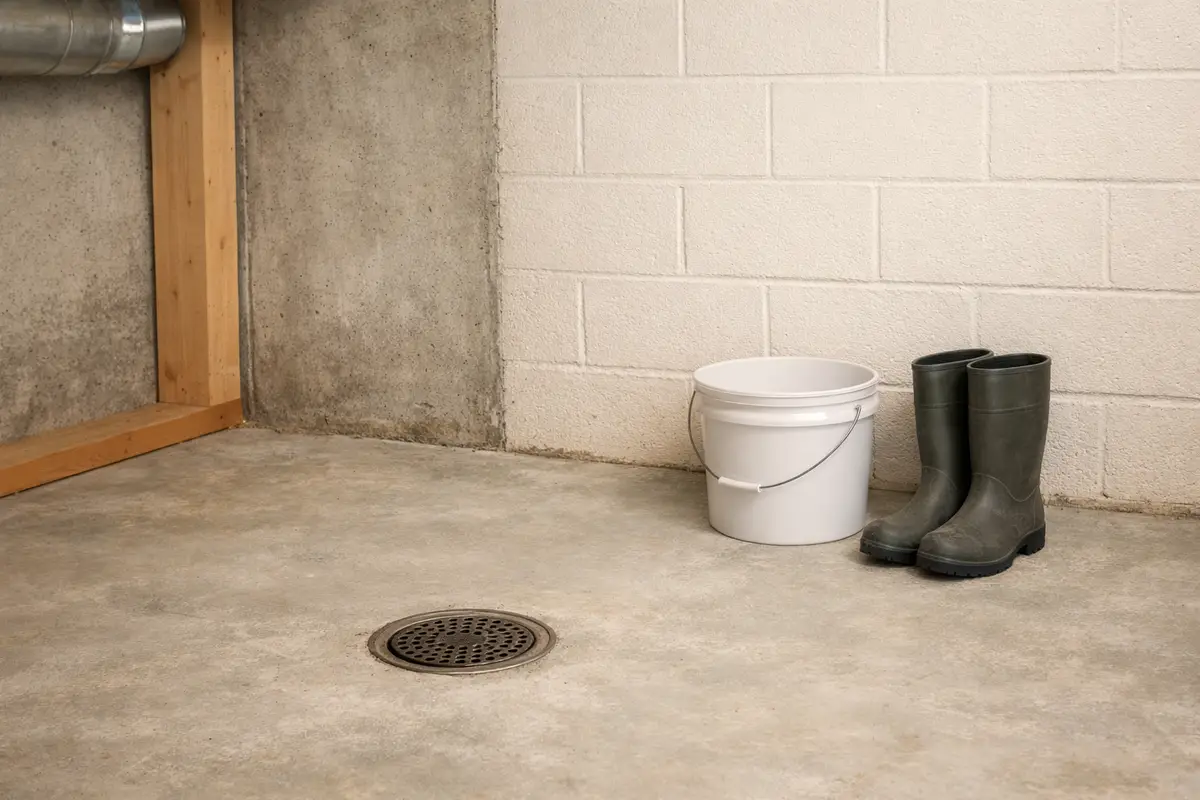
A homeowner finds water coming up from a basement floor drain and a smell she cannot place. She answers no to a gas smell and no to water near electrical equipment, yes to water inside, and she does not know how long it has been there. The outcome is a professional now, with an assumption of mold. She keeps the children and her partner, who has asthma, upstairs. She photographs the wet carpet and boxes before anything is moved, calls a professional experienced with contaminated water damage and a plumber, and phones her insurer to ask whether she has a sewer or drain backup endorsement. She does not run fans over the area and does not turn on the heating and cooling system.
Related
The water damage checklist has the longer drying sequence, and Is my damage covered? has the coverage logic.