
ChecklistTick as you go, saved in this browser, prints cleanly
Water Damage: First 48 Hours Checklist
Do safety first (gas, power, generators), then photograph and call your insurer, make only temporary repairs, and get wet materials dry within 24-48 hours. The list keeps your ticks in this browser and prints.
On this page
Water damage: first 48 hours
Work top to bottom. Safety comes first, then proof for the insurer, then drying. Tick items as you go; your ticks stay in this browser.
0 of 24 done
Before you touch anything
If a gas smell, standing water near outlets or sewage is involved, stop and call a professional first.
A spark from a light switch or phone inside can ignite gas.
Source: CDC, Safety guidelines: reentering your flooded home
Water and live electrical equipment can kill. Never switch power on or off, or use an electric tool, while standing in water.
Source: CDC, Safety guidelines: reentering your flooded home
Carbon monoxide has no smell and builds up fast indoors.
Source: CDC, Safety guidelines: reentering your flooded home
Source: EPA, Mold cleanup in your home
Proof for the insurer, before you clean up
Insurers settle on what you can show. Debris removed before it is documented is hard to claim.
Source: NAIC, Navigating the claims process: recover and rebuild
Stop it getting worse
Policies may not cover further damage if you did not take reasonable steps. Permanent repairs before the insurer inspects can put the claim at risk.
Dry it out
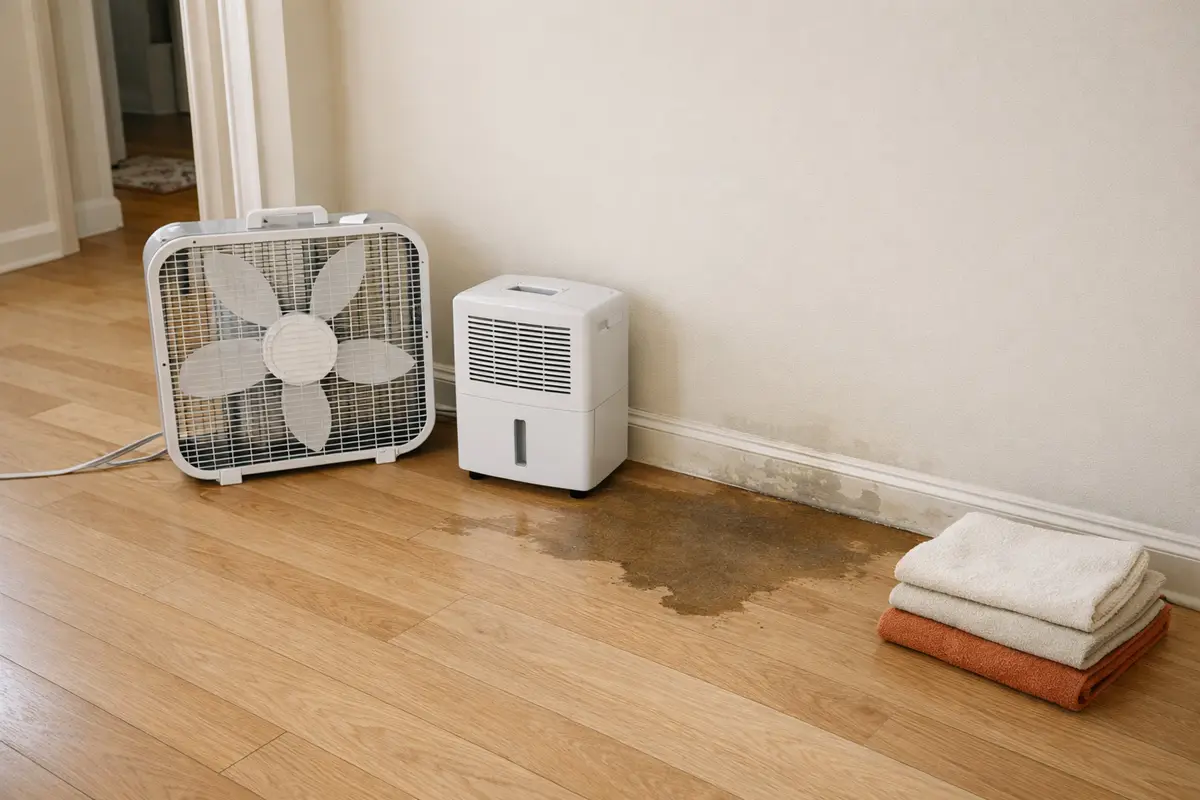
Aim to get wet materials dry within 24-48 hours. Past that, assume mold may start.
Moving air can spread spores.
Source: EPA, Flood cleanup to protect indoor air and your health
Before the adjuster comes
Sources (9)
- CDC, Safety guidelines: reentering your flooded home cdc.gov
- EPA, Flood cleanup to protect indoor air and your health epa.gov
- EPA, Mold cleanup in your home epa.gov
- EPA, A brief guide to mold, moisture and your home epa.gov
- Homeowner's and renter's guide to mold cleanup after disasters (CDC-hosted, 2015) cdc.gov
- NAIC, Navigating the claims process: recover and rebuild content.naic.org
- NAIC, What you need to know when filing a homeowners claim content.naic.org
- Texas Department of Insurance, Home insurance guide tdi.texas.gov
- California Department of Insurance, Residential Property Claims Guide (April 2023) insurance.ca.gov
How the list is ordered
The order matters more than the individual items. The first section is about not getting hurt, because the worst outcomes after water gets into a house are electrical shock, gas, and carbon monoxide from a generator run in the wrong place. Only after that does the list turn to evidence for your insurer, then to stopping the damage from spreading, and last to drying.
Evidence comes before cleanup because insurers settle on what can be shown. The National Association of Insurance Commissioners tells people to document every loss before removing debris or belongings, and the North Dakota and Texas insurance departments both say to keep repair records. If you throw out a soaked rug before photographing it, you have given up your best proof that it existed and was ruined.
The drying section follows the Environmental Protection Agency. Its brief guide to mold says to dry wet areas and items within 24-48 hours, and its flood cleanup page says mold can grow on wood, drywall, carpet and furniture that stay wet for more than 24 hours. A federal guide for homeowners written after Hurricane Sandy gives a practical test: if you could not dry the house and its contents inside that window, assume mold is present.
Temporary repairs only
Some items ask you to make temporary repairs and to hold off on permanent ones. That is not caution for its own sake. The Texas Department of Insurance warns that permanent repairs made before the insurer inspects can lead to a denial, and California's insurance department says a policy may not cover further damage if you did not take reasonable steps to protect the property. A tarp over a roof opening and plywood over a broken window satisfy both rules. A new roof does not, yet.
Keep every receipt. Costs for temporary repairs, equipment, and a place to stay are things insurers commonly reimburse on a covered loss, and you can only claim what you can show you spent.
Worked example: a supply line fails while you are out
Imagine you come home to a wet kitchen floor and water still running from under the sink. You do not know yet whether the cabinet or the wall is soaked. Start with the first section: no gas smell, and you are not standing in water near an outlet, so it is safe to go in. Shut off the water at the source, then work down the list. Photograph the cabinet, the floor and the wall before moving anything. Call your insurer and describe what happened in plain words. Put a note in your call log. Open the cabinet doors and take out the drawers so the hidden spaces can dry, and clean any visible mold before you bring in a fan.
By the end of that first evening you have a record, a call logged with the insurer, and the drying under way. That is the point of the list: not to do everything at once, but to do the right thing next.
When to stop and call someone
Some items are marked urgent, and they are not do-it-yourself jobs. If the water may include sewage, EPA says to call a professional experienced with contaminated water damage. If mold covers more than about 10 square feet, or the water damage is substantial, its guidance is to consult a professional experienced in mold cleanup. If the heating and cooling system was reached by floodwater, have it cleaned by a professional before you run it.
What this list does not do
It does not tell you whether the loss is covered; use Is my damage covered? for that. It does not price the repair. Public sources for repair costs are hard to come by, which is why this site does not publish cost estimates it cannot trace to a saved page. Once this first stretch is over, the claim documentation checklist picks up where this one stops.