
TroubleshooterA few questions, then an urgency level and next steps
Repair or Replace the Roof Troubleshooter
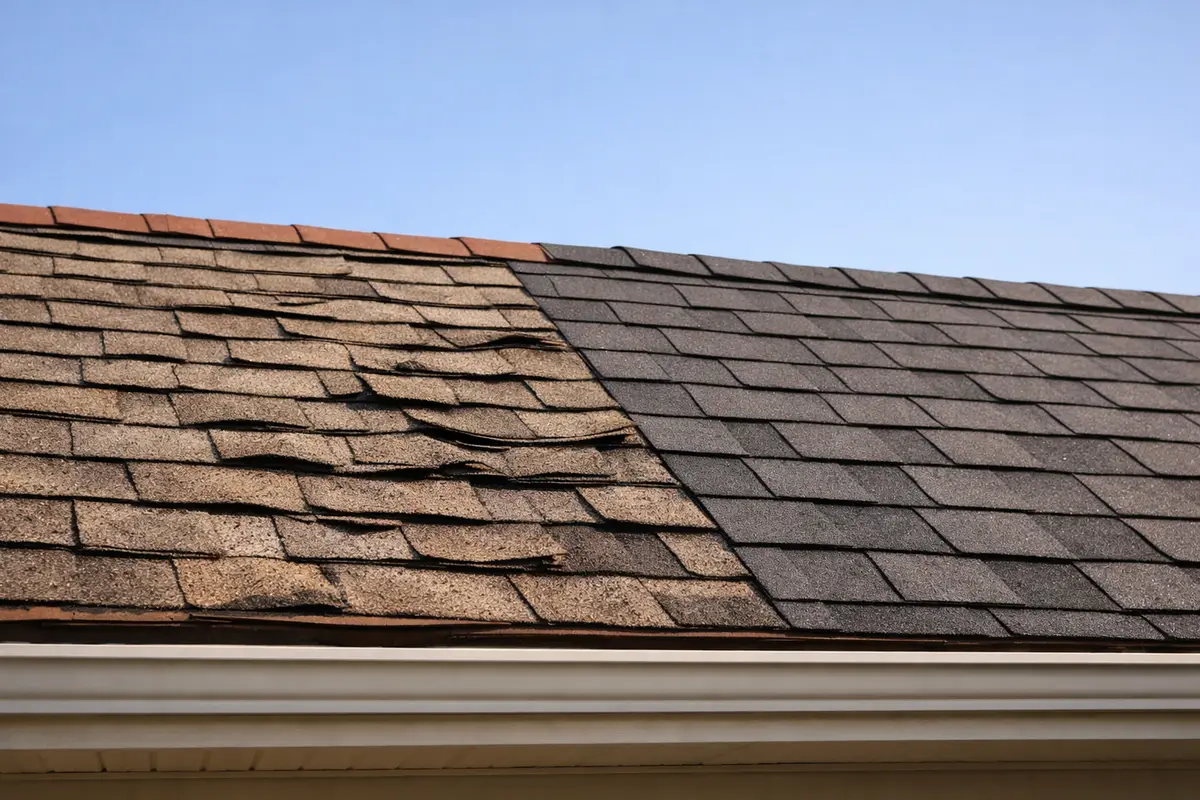
Compare the roof's age with the typical life of its material, then weigh how much is damaged and whether a storm caused it. The result is repair, get it inspected, or plan a replacement, with the insurance questions to ask.
On this page
Repair or replace the roof?
Answer a few questions about the roof's age, how much of it is damaged and what caused it. You get a likely direction: patch it, have it inspected, or start planning a replacement. It is a way to prepare for a roofer's visit, not a substitute for one.
Is a ceiling sagging, is water dripping near wiring or a light, or has part of the roof or roof deck visibly moved or collapsed?
Answer yes if any of those is true right now.
Yes, one of those is true
Act now
Act now: this is a safety problem before it is a repair-or-replace question
Water near wiring is an electrical hazard, and a sagging ceiling or a shifted roof can fall. The age of the roof can wait. Getting people clear and the opening covered cannot.
What to do
- If there is a gas smell, standing water near electrical equipment, or damage to the structure, deal with that first: leave, and call the gas company, an electrician or an inspector before anything else.
- Keep people and pets out from under the sagging area, and out of any room with water near wiring.
- Turn off power to that area at the main panel only if you can reach it from a dry spot. Otherwise call an electrician.
- Do not climb onto the roof to check. Look from the ground, from a window or with binoculars, and let a roofer or inspector do the walking.
- Photograph the damage from a safe spot, then call a licensed roofer about a temporary cover.
- If a storm or other sudden event caused it, tell your insurer before permanent repairs.
No
How old is the roof compared with the typical life of its material?
InterNACHI's chart gives typical lives in years, as it prints them: Asphalt Shingles (3-tab) 20; Asphalt (architectural) 30; Metal 40 to 80; Slate 60 to 150; Clay/Concrete 100+. Other materials are in the lifespan lookup. These are typical estimates, not a guarantee, and hot climates, severe weather, installation and maintenance change them.
Past that typical life, or close to it
How much of the roof is damaged or leaking?
Think about the whole roof, not only the spot you noticed.
One spot or one small area
Deal with it soon
Get it inspected: a repair may only buy time
On a roof at or beyond its typical life, a single repair can work, but the rest of the roof is near the end too. A roofer can tell you whether the surrounding material will hold a patch or whether paying for a repair is money better put toward replacement.
What to do
- Do not climb onto the roof to check. Look from the ground, from a window or with binoculars, and let a roofer or inspector do the walking.
- Ask a licensed roofer to inspect the whole roof and say in writing how much life is left. The typical lives are estimates from a home-inspector association, not a guarantee. Climate, installation and maintenance can move the real number either way.
- Ask for written prices for both the repair and a replacement, on the same scope.
- Photograph the roof and the damage now. If a storm caused it, tell your insurer before permanent work.
- Start setting money aside or looking at financing, so a replacement does not arrive as an emergency.
Leaks in several places, or damage across much of the roof
Did a storm or other sudden event cause the damage?
Wind, hail, a fallen tree and similar events count. Gradual wear does not.
Yes, it followed a storm or a sudden event
Deal with it soon
Plan a replacement, and file the claim first
An older roof with widespread damage from a storm is a likely replacement, and the claim comes before the work. Roof age matters to the payment: many policies pay actual cash value on older roofs, which subtracts depreciation, so the first check may be smaller than the bill.
What to do
- Do not climb onto the roof to check. Look from the ground, from a window or with binoculars, and let a roofer or inspector do the walking.
- Photograph the roof and the inside damage before any work, and keep receipts for temporary covers.
- Report the claim promptly and make only temporary repairs until the adjuster has inspected.
- Find out whether your policy pays replacement cost or actual cash value for the roof, and ask how depreciation is applied and how the withheld part is released.
- Get written replacement estimates from licensed, insured roofers, and send them to the insurer if the adjuster's number is lower.
- Do not sign a replacement contract or pay a deposit until you know what the insurer will pay.
No, it seems to be age and wear
Deal with it soon
Start planning a replacement
A roof at or beyond its typical life with leaks in several places is usually past the point where patching pays. Age and wear are generally not insured causes, so expect to pay for this yourself and plan the timing and the money.
What to do
- Do not climb onto the roof to check. Look from the ground, from a window or with binoculars, and let a roofer or inspector do the walking.
- Keep water out in the meantime: have a roofer cover or patch the worst spots, and dry what got wet.
- Get written replacement estimates from more than one licensed, insured roofer, with the same materials and scope on each.
- Ask each roofer what they found under the roof covering, since rotted decking raises the price.
- Ask your insurer if you are unsure whether any part of the damage came from a sudden event, and photograph everything in case it did.
- Check references, licenses and insurance before you sign, and get the contract in writing.
Well inside it
How much of the roof is damaged or leaking?
Think about the whole roof, not only the spot you noticed.
One spot or one small area
Did a storm or other sudden event cause it?
Wind, hail, a fallen branch and similar events count. Gradual wear does not.
Yes, it followed a storm or a sudden event
Deal with it soon
A repair is likely the right call, and you may have a claim
A young roof with one damaged area is usually a repair. Because a sudden event caused it, the damage may be covered, so report it before permanent work and find out whether the repair cost is worth a claim against your deductible.
What to do
- Do not climb onto the roof to check. Look from the ground, from a window or with binoculars, and let a roofer or inspector do the walking.
- Photograph the damage from the ground and inside, and keep receipts for any temporary cover.
- Make temporary repairs only until the insurer has had a chance to inspect.
- Ask the insurer whether your policy pays replacement cost or actual cash value, and read the roof section for any age-based limits.
- Get a written estimate from a licensed, insured roofer, and ask them to say whether the damage is limited to one area.
No, it seems to be wear or it appeared slowly
Deal with it soon
A targeted repair is likely enough
A roof well inside its typical life with one problem area usually calls for a targeted repair, and wear is generally not an insured cause. The repair is worth doing promptly, because water that keeps getting in turns a small fix into a large one.
What to do
- Do not climb onto the roof to check. Look from the ground, from a window or with binoculars, and let a roofer or inspector do the walking.
- Photograph the spot and any stain inside, and mark the edge of the stain to see if it grows.
- Have a licensed roofer find the actual entry point, which is often not where the stain is.
- Ask what caused the failure, and whether other spots of the same kind are likely to follow.
- Dry wet materials inside within 24-48 hours where you can.
- Keep the photos and the invoice. If a roofer later finds storm damage, they help show what happened.
Leaks in several places, or damage across much of the roof
Deal with it soon
Get the whole roof inspected before you choose
Leaks in several places, or damage across much of a roof, suggest a problem larger than one patch even on a roof that is not old. The cause matters here: a storm, a defect in the work or a failing layer each point to a different answer.
What to do
- Do not climb onto the roof to check. Look from the ground, from a window or with binoculars, and let a roofer or inspector do the walking.
- Photograph every stain inside and the roof from the ground, with dates, before anything is moved.
- Ask a licensed roofer for a full inspection and a written report, and consider a second opinion from another roofer or a home inspector.
- If a storm could be the cause, tell your insurer before permanent repairs and ask for their adjuster's inspection.
- If the roof was installed or repaired recently, check whether a workmanship or manufacturer warranty still applies before anyone else works on it.
- Compare a repair estimate with a replacement estimate on the same written scope.
I don't know the age or the material
Deal with it soon
Find the age first, and have the roof inspected
Without the age and the material you cannot compare the roof with a typical life, and a roofer or inspector will want both. An inspection can often tell material and condition even when the age is a guess.
What to do
- Do not climb onto the roof to check. Look from the ground, from a window or with binoculars, and let a roofer or inspector do the walking.
- Look for the age in your closing papers, past inspection reports, permit records or receipts, and ask the seller or the previous owner if you can.
- Photograph the roof from the ground, and any stains inside, so a roofer can see what you see.
- Ask a licensed home inspector or roofer to assess the roof's condition and its likely remaining life. The typical lives are estimates from a home-inspector association, not a guarantee. Climate, installation and maintenance can move the real number either way.
- Get written estimates from more than one roofer before you decide on a repair or a replacement.
What this page is for
A roof problem forces a choice that is hard to make while water is coming in. Do you patch it, or do you replace the whole thing? This troubleshooter helps you think it through before a roofer arrives, so that you can ask better questions and read their estimate with more confidence.
It looks at a few things. How old is the roof compared with the typical life of its material? How much of it is damaged? Did a storm or other sudden event cause the damage? And is there any safety problem right now? It then points you toward a repair, an inspection, or a plan for replacement. It cannot see your roof. A licensed roofer or home inspector has the last word.
Where the lifespan figures come from
The age question uses typical lifespans from a chart published by InterNACHI, an association of home inspectors. The lifespan lookup shows more roofing materials and other parts of the house.
Treat those figures as typical estimates, not a guarantee. InterNACHI itself says its chart is a general guideline. The real life of a roof depends on local weather, the design, the quality of the material, the quality of the installation and how well it was maintained. Hot climates are hard on asphalt shingles, and severe weather such as hail can shorten a roof's life or damage part of it. A roof can wear out early, and a well-kept one can outlast the range.
How to use it
Start with the safety question. A sagging ceiling, or water near wiring, comes before everything else. Then find your roofing material and your best guess at the roof's age. Look in your closing papers, inspection reports and permit records if you are not sure. If you cannot find it, the troubleshooter sends you to get the roof inspected first.
Do not climb onto the roof to answer any of these questions. Look from the ground, from a window or with binoculars. Roofs are dangerous when they are wet, icy or steep.
What the results mean
A repair result means the roof is well inside its typical life and the problem is limited to one area. The fix is usually targeted. An inspection result means something is unclear: the age, the cause or the extent. A professional's report will settle it. A replacement result means the roof is at or beyond its typical life and the damage is widespread, or a storm has damaged most of it.
On an older roof, even a small repair may only delay the inevitable. That is why the older-roof paths ask for written prices, one for the repair and one for a replacement on the same scope.
Insurance and roof age
Age also changes what an insurer pays. Some policies pay replacement cost. Others pay actual cash value, which subtracts depreciation, and that matters most for an older roof. Texas Department of Insurance works through a roof example, and we cover it in the depreciation guide. Wear and age are generally not covered. A sudden event such as wind or hail may be. Is my damage covered? helps you frame the question for your insurer.
If a storm may be involved, photograph the damage, make only temporary repairs and report the claim before you sign a replacement contract.
Worked example: a roof near the end of its life after a hailstorm
A homeowner has an architectural shingle roof that her closing papers say is close to the typical life InterNACHI gives for that material. After a hailstorm she finds stains on several ceilings and damaged shingles along the whole south slope. No ceiling sags and nothing is near wiring.
She rules out a safety problem, then picks the answer for a roof close to its typical life. She picks leaks in several places, and she says a storm caused it. The result is to plan a replacement and file the claim first. She photographs the stains and the slope from the ground. She reports the claim before any permanent work, makes only a temporary cover, and asks her insurer whether her policy pays replacement cost or actual cash value for the roof. She gets replacement estimates from roofers and does not sign a contract until she knows what the insurer will pay.
When to call a pro
Call a licensed, insured roofer whenever the roof needs to be walked, the cause is unclear, or flashing, a skylight or the roof deck may be involved. Call an electrician or an inspector if water has reached wiring, and a structural professional if the roof or a ceiling has shifted. Call your insurer early if a sudden event may be the cause.
Next steps
The roof leak troubleshooter helps you find where the water is getting in. Document a storm with the storm damage walkthrough, and compare bids with the hiring a contractor checklist. To see how long other parts of the house typically last, use the lifespan lookup.